



.webp)



Precast Roof in Pakistan: Where It Works and Where It Does Not
Read more


.webp)
You have seen it happen. A project starts with a celebration. The crew mobilises. Everyone is excited. Then, three weeks in, something goes wrong. The soil is weaker than the report said. A material delivery is delayed by two months. A design detail cannot be built the way it was drawn.
The project falls behind. Costs go up. The client is angry. The contractor is stressed.
Most of those problems could have been caught before anyone broke ground. The best construction companies in Pakistan know this. They invest time and money in pre-construction planning, not because they have extra budget to burn. Because they have learned that every hour spent planning saves at least three hours during construction.
This blog walks through what pre-construction planning actually looks like, why it separates the best firms from the rest, and how it plays out on real projects in Pakistan.
Pre-construction planning is not one meeting. It is a process that happens before any equipment moves onto the site. The best construction companies in Pakistan treat it as a non-negotiable phase, not a suggestion.
Here is what that process covers.
Site analysis and investigation. Before designing anything, the team visits the actual ground. They check access roads. They review soil reports. They verify utility connections. They talk to local authorities about permits. They do not trust the drawings alone.
Constructability review. The team takes the design drawings and asks one question: Can we actually build this? A detail that works on a computer screen might be impossible to execute in the field. Cost estimation happens here, too. The team identifies which elements will be expensive long before materials are ordered.
Value engineering. This is not about cutting quality. It is about finding smarter ways to achieve the same result. Can a different material save money without weakening the structure? Can a simpler detail save time without affecting safety? Feasibility studies help answer these questions before commitments are made.
Procurement planning. The team figures out exactly when every material and piece of equipment needs to arrive. Steel. Cement. Pipes. Generators. They work backwards from the completion date and schedule every delivery. This prevents the chaos of rush orders and site storage problems.
Risk identification. The team sits down and lists everything that could go wrong. Not vague risks like "weather." Specific ones. The one bridge on the access road might not handle heavy trucks. The single supplier for a critical component. Then they build a plan for each risk.
For a formal framework on front-end planning, the Construction Industry Institute has published extensive research showing that effective pre-project planning directly correlates with successful project outcomes.
.webp)
The value of pre-construction planning is invisible until something goes wrong. Then it becomes everything.
Here is a real example.
A contractor bids on a factory project. The timeline is tight. The client wants the work to start immediately. The contractor skips the site analysis and orders steel based on old drawings. The crew mobilises. Work begins.
Three weeks in, the excavation hits unexpected rock. The foundation design does not work. The steel has already been cut to the wrong dimensions. Rework takes eight weeks. The client is furious. The budget is blown.
Now here is the same project with proper pre-construction planning.
Before mobilising, the best construction companies in Pakistan send a team to the site. They take soil samples. They find the rock layer. They redesign the foundations before ordering any steel. They adjust the budget and timeline before the client signs off. When excavation starts, there are no surprises.
Project planning at this level also catches design errors early. A senior site engineer reviews the drawings and notices that a beam detail cannot be built with the equipment available. Instead of discovering this mid-pour, the team flags it during pre-construction. The design gets revised on a computer, not on a concrete truck.
Budget forecasting becomes much more accurate when risks are identified upfront. The contractor can tell the client: "Based on the soil report, you have a seventy percent chance of needing piling. Here is what that will cost if it happens." The client makes an informed decision instead of receiving a surprise bill.
For a practical guide on value engineering and cost management, the Royal Institution of Chartered Surveyors publishes resources on construction cost forecasting and risk management.
Pakistan's construction environment makes pre-construction planning harder and more valuable at the same time. Supply chains are less predictable. Permit processes vary by region. Site conditions can change dramatically within a few kilometers.
The contractors who succeed here are the ones who do their homework before they start.
Here is how pre-construction planning works on real Pakistani projects.
Remote site verification. Before mobilising to the well sites in the Thar Desert, experienced contractors physically visit the location. They check access roads. They verify water sources. They confirm that survey markers are visible. They talk to local communities about road use and working hours. This happens weeks before any equipment moves.
Soil investigation. For the QICT Berth Expansion at Port Qasim, ground improvement required detailed geotechnical analysis before any design work. The team worked with Fugro Dubai to understand the reclaimed land conditions. That analysis shaped every decision about piling, surcharging, and PVD installation. Without it, the project would have failed.
Permit mapping. For the Gharo Grid Station project, funded by KfW through Siemens, permits were required from multiple agencies. The team mapped every required approval, assigned responsibility for each one, and tracked progress weekly before mobilisation began. When a permit was delayed, it did not stop work because work had not started yet.
Subcontractor pre-qualification. For the Dolphin X1 well project for PPL, which involved jetty construction and barge operations, every subcontractor went through a formal pre-qualification process before any contract was signed. Safety records. Equipment condition. Past performance. All checked upfront.
Value engineering in precast. On the PARCO Coastal Refinery wall panels and the SECMC Coal Silo, the team used precast elements manufactured off-site. This was not just a construction decision. It was a pre-construction decision based on site constraints, timeline pressure, and quality requirements.
AMCORP has delivered projects across Pakistan that demanded this level of pre-construction discipline. The company's feasibility study approach and project planning systems are built on decades of experience working in remote and complex environments.
For developers and project owners looking to understand best practices, the Pakistan Engineering Council provides guidelines for quality assurance in construction projects.
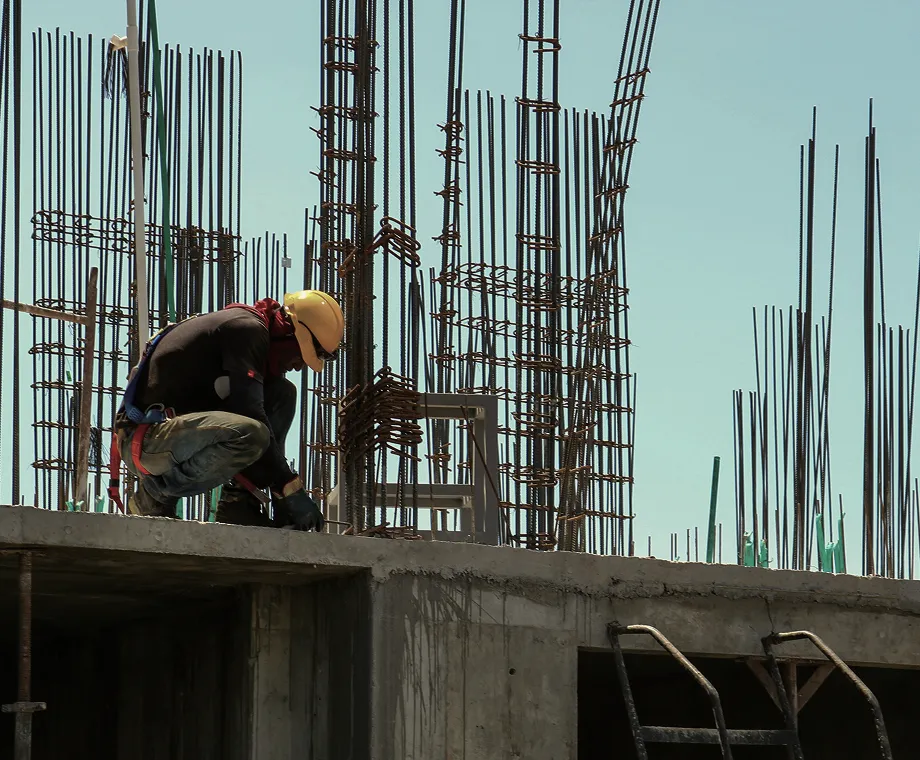
Pre-construction planning is not expensive. It is an investment that pays for itself many times over.
The best construction companies in Pakistan did not get to where they are by being lucky. They got there by being prepared. They built systems that force pre-construction work to happen even when everyone is impatient to start. They know that skipping this phase does not save time. It just moves the problems from the planning table to the construction site, where they cost ten times more to fix.
You do not need a massive budget to do this better. You need discipline. A checklist. The willingness to say no to a client who wants work to start before the preparation is done.
On your next project, ask your contractor one question before you sign anything: What have you done to prepare for this site specifically, not in general? Their answer will tell you everything about whether they are among the best or just among the loudest.

Construction companies in Pakistan rarely fail because of bad building work. They fail due to cash flow gaps, underbidding, weak contracts, and overextension during growth.