



.webp)


What a Construction Company Profile Should Actually Contain
Read more


%20The%20Quality%20Documentation%20Methods.webp)
Every construction company has lost something valuable when a senior engineer walks out the door.
Not equipment. Not a client relationship. Knowledge. The kind that took ten years to build. Which subcontractor consistently shows up late? How to sequence a particular pour in the monsoon season. What the client's inspector actually looks for before signing off.
When that person leaves, the next project starts from zero. Same mistakes get made. The same time gets wasted. Same problems get solved for the first time again.
The largest construction firms figured out decades ago that relying on individual memory is not a strategy. It is a gamble. And on complex projects with tight deadlines, it is a gamble they refuse to take. Instead, they build documentation systems that carry lessons from one project to the next, regardless of who is on the team. This blog walks through exactly how they do it and what that looks like when applied to Pakistani sites.
Most people hear "documentation" and imagine thick binders that no one ever opens. That is not what this is.
At leading construction companies, documentation is built into the flow of work. It happens while people are still on site, not months after they have left. The goal is not to create perfect records. The goal is to make sure the next project team does not have to learn the same hard lessons all over again.
Here is what that looks like in practice:
The real test of any documentation system is whether it actually gets used when things go wrong.
Engineers at top construction companies learn to treat documentation as a tool, not a chore. When a dispute comes up with a subcontractor, they pull the daily log. When a client questions a variation, they produce the signed change request. When a similar site condition appears on a new project, they search the lessons learned database from the last time it happened.
Here is a specific example.
A piling crew runs into unexpected rock layers. The job slows down. Costs go up. On a company with no documentation system, that problem gets solved in the moment and then forgotten. Six months later, on a different site fifty kilometers away, the same crew hits the same rock and loses the same time.
At the biggest construction companies, that does not happen. The first site documents the rock depth, the drilling method that worked, the bit type that lasted longest, and the extra time required. That document gets reviewed before the next site even starts mobilizing. The second crew arrives knowing what to expect.
This is not complicated. It is just disciplined.
The same applies to commercial documentation. Largest construction firms log every variation, every delay notification, and every client instruction in writing before work proceeds. They do not rely on memory or goodwill. They rely on paper trails that protect both sides when conditions change.
For internationally recognized guidance on managing knowledge and documentation in large infrastructure projects, the Project Management Institute publishes standards for lessons learned and knowledge transfer.
%20The%20Quality%20Documentation%20Methods.webp)
Pakistan's project environment makes knowledge transfer harder and more valuable at the same time.
On remote sites in Sindh and Balochistan, engineers rotate in and out. Supply chains shift. Client representatives change mid-project. If knowledge lives only in someone's head, it disappears the moment they drive off-site.
The companies succeeding on Pakistan's most demanding projects have built documentation habits that work even when the internet is patchy, and the head office is eight hours away.
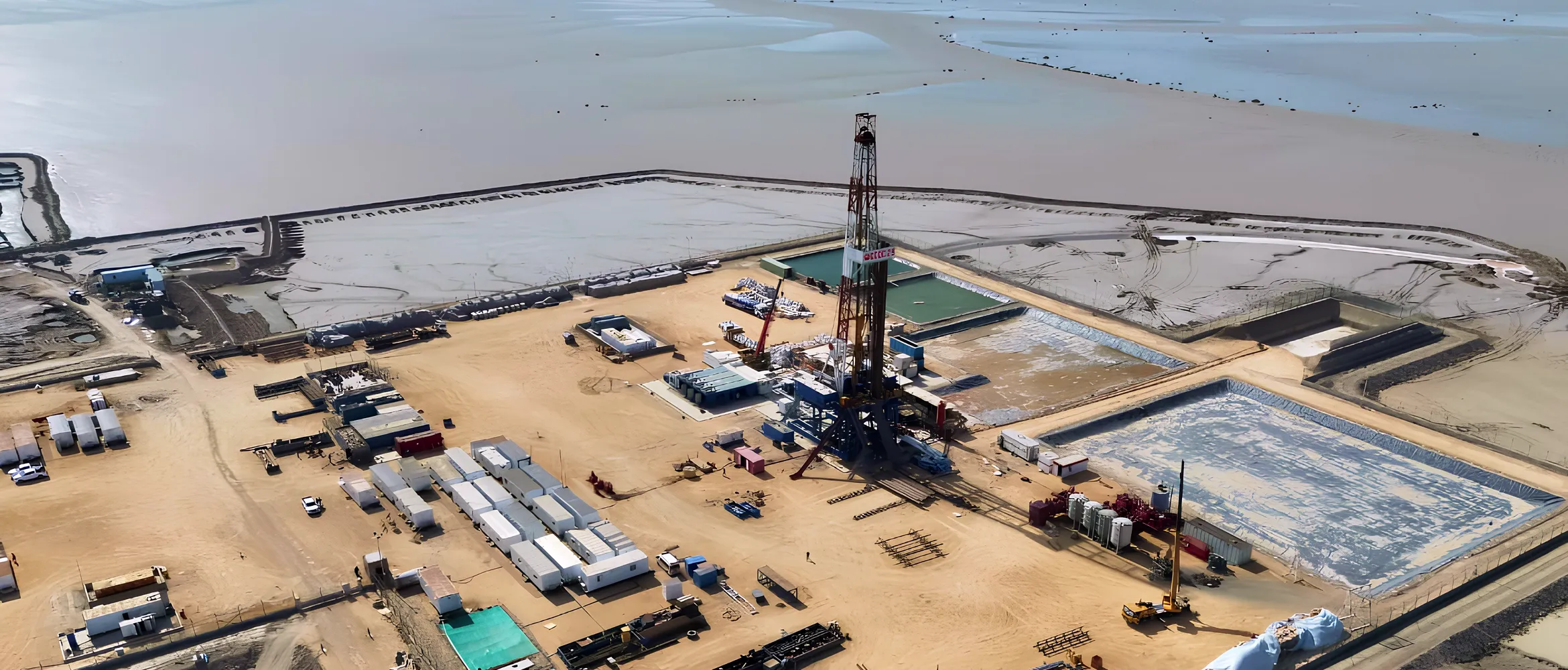
Standardize site diaries across all projects. Whether the site is a well pad in the Thar Desert or a high-rise in Karachi, the daily log follows the same format. That means when an engineer moves from one project to another, they already know how to read the history.
Digital backups printed weekly. Remote sites cannot always rely on cloud storage. Smart site teams keep paper copies of critical documents: daily logs, test results, variation approvals, updated weekly, and stored in a fireproof box.
Pre-mobilization document reviews. Before a new project starts, the team reads through the lessons learned from the last three similar projects. Not the whole file. The summary. The two pages that say: here is what cost us time last time. Here is what we should do differently.
One example from AMCORP's own experience. On the QICT Berth Expansion at Port Qasim, ground improvement across 28 acres of reclaimed coastal land required methods that had never been used in Pakistan before. Working with Fugro Dubai and Menard Egypt, the team documented every step. The PVD installation rates. The surcharge loading schedules. The piezometer readings. That documentation did not just serve that project. It became the reference for anyone in Pakistan attempting similar ground improvement work in the future.
The same discipline applied to the 160 MMSCFD Naimat Gas Plant. Over 3,000 anchor bolts had to be placed with millimetre-level precision before the equipment left China. Every drawing revision, every design change, every site instruction was logged. When the client asked for proof that bolts were placed correctly, the documentation was ready in minutes, not days.
For local guidance on professional documentation standards, the Pakistan Engineering Council emphasizes record-keeping as part of good engineering practice.
%20The%20Quality%20Documentation%20Methods.webp)
You do not need expensive software to start transferring knowledge better.
You need a system. And the system only needs three things to work.
First, a standard format for site diaries that every engineer on every project follows. Second, a lessons learned session after every major phase, with someone responsible for writing down what the team learned. Third, a pre-start review on every new project where someone reads those lessons out loud before work begins.
The largest construction firms did not build their knowledge systems overnight. They built them one project at a time. One document at a time. One lesson at a time. The companies winning repeat business from the most demanding clients in Pakistan are not the ones with the smartest individuals. They are the ones who do not lose what those individuals know when they move on.
Start small. Pick one thing that went wrong on your last project. Write down what you would do differently next time. Put it somewhere the next team will see it. That is how knowledge transfer starts. And that is how good companies become the kind that clients trust for decades.

What the civil scope on a grid station covers in Pakistan, why tolerances are tighter than most building work, and where these projects typically run into trouble.