





.webp)






Why Construction Companies Fail in Pakistan
Read more



On a small job, one person can hold most of the roles. On a large project, that stops working, and the site organises into a structure where responsibility is divided and reporting lines are explicit.
The short version: the project manager owns delivery, the construction manager runs the physical work, engineers translate drawings into instructions, the QS controls money and measurement, HSE controls safety, and planning controls time. Everything else supports one of those.
Understanding this matters whether you are joining the industry or engaging a contractor. It tells you who to ask for what, and it tells you what a career path in construction actually looks like.
Project Director. On large or multi-site programmes, the project director holds overall accountability, manages the client relationship at senior level, and makes commercial decisions above the project manager's authority. Not every project has one. Those that do are usually large enough that the project manager cannot also carry client and commercial responsibility.
Project Manager. Owns delivery of the project: scope, time, cost, quality, and safety. The project manager is the single point of accountability to the client and the person who has to reconcile competing pressures when the programme, the budget, and the specification pull in different directions.
Most of the job is decision-making with incomplete information, which is why it usually goes to someone with a decade or more on site rather than the strongest technical engineer.
Construction Manager. Runs the physical execution of the works. Where the project manager holds accountability for the whole, the construction manager makes sure the work actually happens: sequencing, resourcing, and resolving the daily obstacles that stop progress.
On a large site with multiple work fronts, this is a distinct full-time role. On smaller projects the project manager absorbs it.
Site Engineer. The most common entry point for civil engineering graduates in Pakistan. The site engineer sets out the works, checks that execution matches the drawings, inspects before critical operations such as concrete pours, and keeps records of what was done.
The job is largely translation: converting drawings and specifications into instructions a foreman and a work crew can execute, then verifying the result. It is where the skills that matter on site are actually learned, and no classroom substitutes for it.
Senior Site Engineer or Section Engineer. Takes responsibility for a defined area or discipline, supervises junior engineers, and handles technical queries that need resolution before they reach the construction manager.
Design Coordinator or Technical Engineer. Manages the flow of drawings and information between designers and site. Raises requests for information when drawings are unclear or conflicting, tracks revisions, and makes sure the version being built from is the current one. On projects with active design development, this role prevents a large amount of rework.
Surveyor. Establishes and maintains control points, sets out the works, and verifies as-built positions. On infrastructure and marine projects, the surveyor's accuracy determines whether elements built by different crews meet where they are supposed to.

Quantity Surveyor. Measures work done, values interim payments, prices variations, prepares claims, and controls cost against budget. The QS is the reason a contractor gets paid correctly and on time, and the reason a legitimate claim survives scrutiny.
On projects where scope changes frequently, the QS function determines whether those changes are recovered or absorbed. That is often the difference between a profitable project and a loss, which is one of the reasons contractors fail despite building competently.
Contracts Manager or Contracts Engineer. Handles the contractual relationship: notices, correspondence, entitlement, and dispute avoidance. On large projects with complex conditions, this separates from the QS role.
Procurement Officer. Sources materials, plant, and subcontractors, negotiates terms, and manages lead times. On remote sites this becomes a critical path role, because a material ordered late cannot be recovered by working faster.
Planning Engineer. Builds and maintains the programme, tracks progress against it, forecasts completion, and models the effect of delays. Usually working in Primavera P6 on projects of any scale.
The planning engineer's output is also the evidence base for extension of time claims. A programme that has been properly maintained and updated supports an entitlement. One that has not been touched since award does not.
Document Controller. Manages drawings, specifications, correspondence, and records. Unglamorous and genuinely important. When a claim depends on proving what was instructed and when, the document controller's records are what settle it.
HSE Manager or Officer. Owns safety on site: risk assessments, method statements, permits to work, inductions, toolbox talks, incident investigation, and emergency response. On projects for international clients and development finance institutions, HSE requirements are contractual obligations rather than good practice, and failure affects prequalification for future work.
The relationship between this function and production is the real test of a contractor's culture. Where safety genuinely holds authority, the HSE manager can stop work. Where it does not, the role is documentation.
QA/QC Engineer. Verifies that work meets specification through inspection, testing, and documentation. Concrete cube testing, compaction testing, weld inspection, and material approvals. Maintains the quality records that support handover.
Foreman or Supervisor. Directs the work crews, allocates labour, and ensures the day's work happens as planned. Usually promoted from the trades, and often holds more practical knowledge of buildability than anyone else on site.
The working relationship between a young site engineer and an experienced foreman is one of the more important dynamics on any project. The engineer holds the drawings and the specification. The foreman knows what will actually work.
Charge Hand and Skilled Trades. Steel fixers, carpenters, masons, welders, electricians, operators. The people executing the work.
Plant and Equipment Manager. Manages the fleet: allocation, maintenance, fuel, and availability. On projects with heavy plant commitments, equipment downtime is a direct programme risk.
Storekeeper. Controls materials in and out, maintains stock records, and prevents both shortage and loss. On remote sites where resupply takes days, accurate stock control is a delivery issue rather than an administrative one.
Site Administrator and HR. Manages accommodation, timekeeping, payroll interface, visas and documentation, and camp welfare. On the remote sites where teams live on location for months, this function affects retention directly.
A building project in Karachi and a well site in the Thar Desert have the same functions but very different weighting. The urban project needs heavier design coordination and fit-out supervision. The remote project needs procurement, plant, logistics, and camp management as first-order concerns.
Project size changes it too. Below a certain scale, one person holds several roles: the site engineer also does the setting out and some of the QA. Above it, each function needs dedicated ownership or something gets missed.
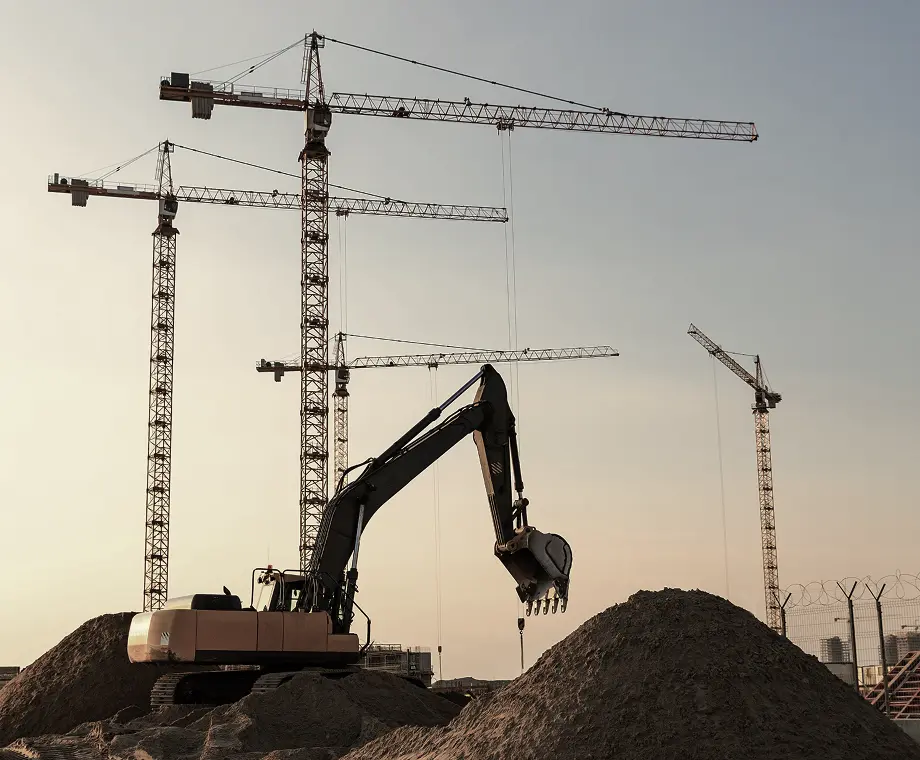
Most civil engineering graduates in Pakistan begin as site engineers, and that is the right place to begin. It is the role with the broadest exposure, and the point from which the paths diverge: toward construction management, toward the commercial side through QS, toward planning, or toward HSE and quality.
Which direction suits someone usually becomes clear after two or three years on site, not before. The Pakistan Engineering Council registration pathway supports the technical routes, and AMCORP has engineers who arrived through each of them.


A clear explanation of how construction companies, contractors, and developers differ in Pakistan, covering ownership, risk, contractual position, and which one your project needs.