




.webp)




What a Construction Company Profile Should Actually Contain
Read more


Construction companies in Pakistan rarely fail because they cannot build. They fail because money runs out before the work finishes.
That distinction matters, because it points at the wrong solution. A firm that collapses mid-project usually had competent engineers and capable site teams. What it lacked was a cash position strong enough to survive a delayed payment, a contract that protected it when the scope moved, or the discipline to walk away from a job priced too low to work.
Here is what actually goes wrong, in roughly the order it kills companies.
A construction company can be profitable on paper and still fail. The reason is timing.
Contractors pay for materials, labour, fuel, and plant before they get paid for the work those inputs produce. An interim payment certificate takes time to be measured, verified, approved, and released. On public sector and large private contracts, that cycle stretches further. Retention money, typically held until after the defects liability period, sits with the client for months or years after the work is finished.
So the contractor is financing the project. That is the actual business model, whether or not anyone describes it that way.
When one client delays a payment, a firm with reserves absorbs it. A firm running tight cannot pay its suppliers, loses credit terms, starts paying cash on delivery, and watches its working capital drain faster. Subcontractors go unpaid, walk off, and the programme slips. Delay damages follow. The project that looked profitable at award is now generating losses.
The firms that survive this treat cash forecasting as a weekly discipline rather than a monthly accounting exercise. They know exactly what is due in, what is due out, and where the gap is thirty and sixty days ahead. That is unglamorous work, and it is the single strongest predictor of whether a contractor is still operating in five years.
The second cause is bidding to win rather than bidding to deliver.
In a competitive tender, the lowest price wins. That creates constant pressure to shave the estimate, and the easiest things to shave are the items nobody can see: preliminaries, supervision staff, plant standing time, contingency, and safety provision. Strip enough of them out, and the bid wins. The project then has to be delivered on a budget that was never realistic.
This is where accurate estimating stops being an administrative function and becomes a survival one. The variables most often underpriced on Pakistani projects are mobilisation on remote sites, access road construction, monsoon disruption, and the standing costs of waiting for a client decision. None of these are unpredictable. They are just easy to leave out when the number needs to come down.
Getting this right starts well before the bid. The work done during pre-construction planning is what tells you whether a price is deliverable or wishful.

Many contractors sign whatever is put in front of them, then discover the consequences when something goes wrong.
The clauses that matter most are the ones nobody reads carefully at award: how variations are valued, what notice period applies to a claim, who carries the risk of unforeseen ground conditions, what triggers an extension of time, and how disputes are resolved. Miss a notice deadline on a legitimate claim and the entitlement is gone regardless of the merits.
The pattern is consistent. A contractor does additional work on verbal instruction, keeps no contemporaneous records, submits the claim late, and cannot substantiate it. The client rejects it. The contractor absorbs the cost. Repeat that across a project and a profitable job becomes a loss.
Proper risk management is largely administrative. Site diaries, dated photographs, written confirmation of verbal instructions, and notices served within the contractual window. It is tedious, and it is what separates firms that recover their costs from firms that do not. Guidance from bodies such as the Institution of Civil Engineers covers the record-keeping standards this depends on.
Rapid growth kills more contractors than slow markets do.
A firm that has delivered a hundred million rupee project wins a five hundred million rupee one and assumes the same team can scale. But the larger project needs more supervision, more plant, more working capital, and more procurement capacity, all committed before the first payment arrives. If the firm takes on two such projects simultaneously, senior staff are split, both sites are undermanaged, and problems on either can sink the company.
The related failure is taking work outside genuine competence. A building contractor bidding a piling package, or a civil firm taking on mechanical scope, is learning at its own expense on a live project. Understanding what an EPC contract actually obliges you to deliver before signing one is a large part of avoiding this.
A contractor with one client is not a business; it is a department with extra risk. When that client delays, changes direction, or ends the relationship, there is no revenue behind it.
This is why the composition of a firm's client list matters as much as its size. A spread of clients across sectors and payment profiles means one problem does not become an existential one.
The straightforward version. Contractors who let their Pakistan Engineering Council registration lapse, or who never hold the category their work requires, are excluded from tenders they could otherwise win. The same applies to tax registration, statutory filings, and the certifications many clients now require at the prequalification stage.
None of this is difficult. It just needs someone whose job it is to track renewal dates. Anyone assessing a contractor should be verifying these credentials before award, and any contractor should assume they will be checked.

The firms that last decades in Pakistani construction share a small set of habits. They forecast cash weekly. They decline work priced below the cost of delivering it, even when the pipeline looks thin. They read contracts before signing and serve notices on time. They grow at a rate their supervision capacity supports. And they build a client base broad enough that no single relationship can end them.
None of that is about construction technique. It is about running a business that happens to build things. Firms that understand the difference tend to still be here in twenty years, and the record of who has lasted in this market is a reasonable guide to who understood it.
For anyone selecting a contractor, these are also the right questions to ask. Not just what a firm has built, but whether it is financially structured to finish what it starts. AMCORP has operated since 1965, and the reason is not that the projects were easy.

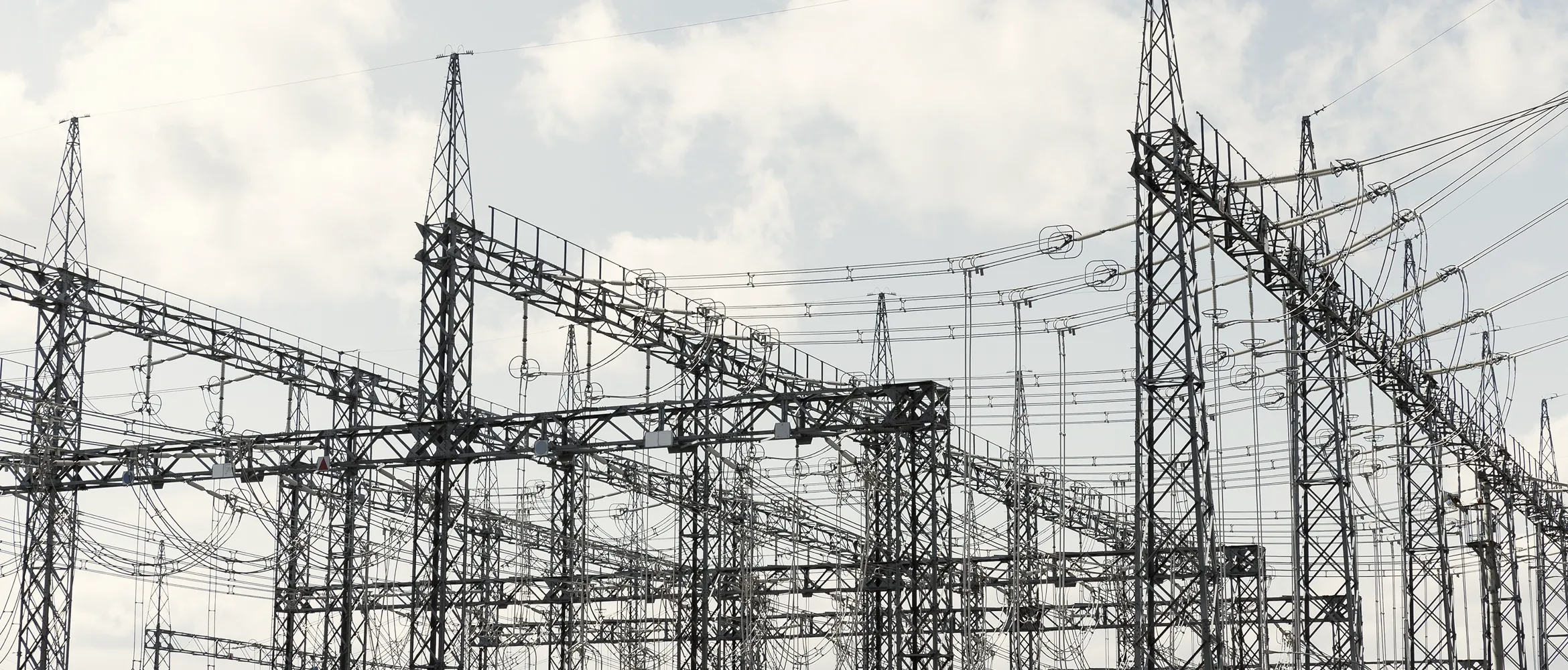
What the civil scope on a grid station covers in Pakistan, why tolerances are tighter than most building work, and where these projects typically run into trouble.